
Listening, Asking, Walking: A Reflection on Justice by Jessica González, PMER and PSEA Facilitator in Bolivia
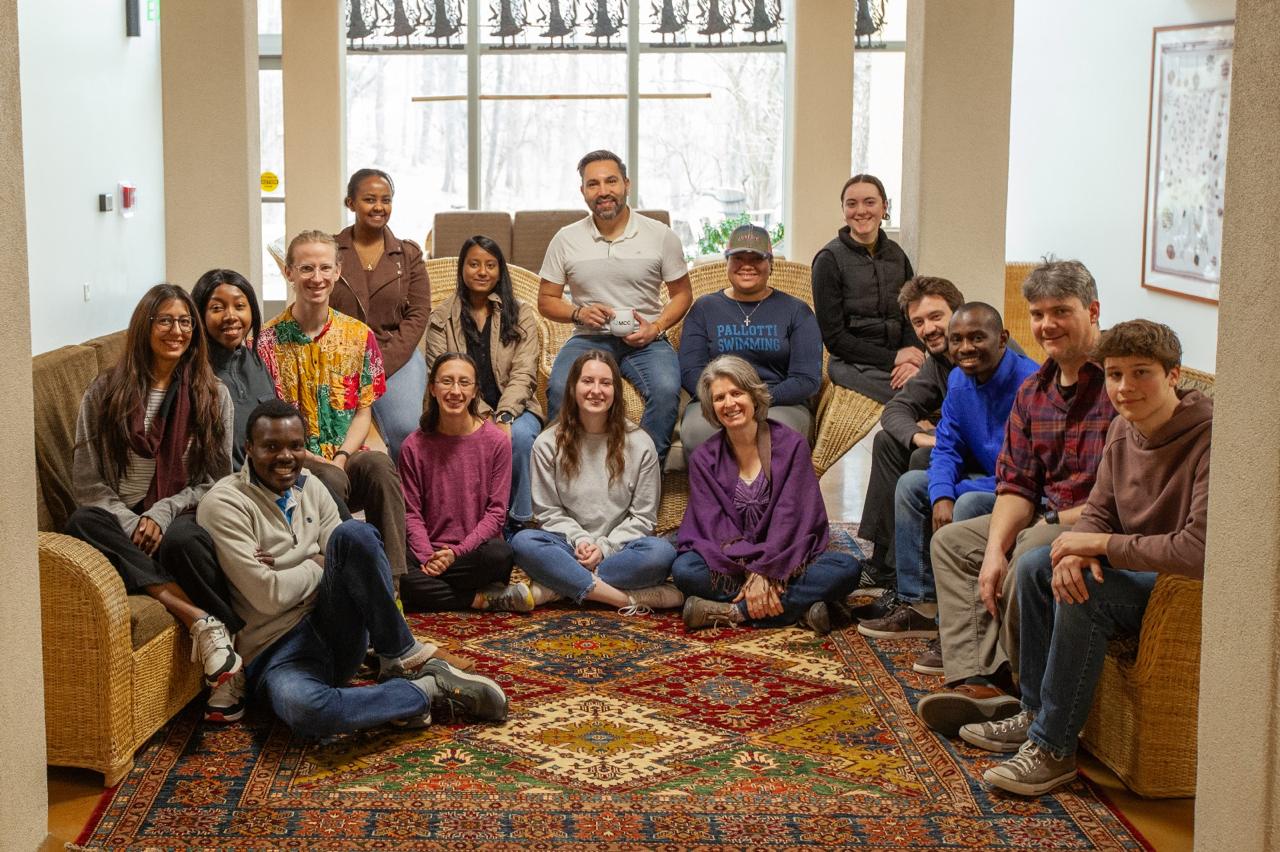
Last month I had the opportunity to participate in the Peace Camp held in Akron, along with other young people from the United States, Zimbabwe, Mozambique, Kenya, Ethiopia, and India. It was a space to reflect on the relationship between climate change and migration. For a week, we shared spaces that included dynamic group activities, art, deep dialogues, and even the creation of a collective song. All of this helped us to imagine possible paths of action in the face of the urgent challenges we face.
When thinking about how the consequences of climate change and the migration policies of various countries affect so many people, some questions came to mind: how do we imagine a more just world? How can we think about justice and work towards it?
A significant part of the meeting was our visit to Washington, D.C., where we were able to dialogue with constituents of the Senate and share our concerns about public policies related to these issues. MCC’s Washington office does important advocacy work, raising our voices before those who have the capacity to make decisions. However, after these discussions, we also stopped to think: to what extent do our voices manage to influence the spaces of power? Is the voice – always – a tool that makes justice possible? What does it mean to raise your voice from a Latin American or African context?

To work for justice, it is necessary to give up the idea that we have the answers when we do not yet know the questions. Even if we talk about the same issues, like climate change and migration, the way we experience them – depending on who we are and where we are in the world – is different. Working for justice must be a contextual and localized work. It must also be collective.
In Bolivia, it is necessary to understand how justice is defined, lived and experienced by Bolivians in different contexts – to understand what their concerns and needs are and how, from some theoretical and practical tools, we can build something that makes sense for people, with people.
The invitation I would like to make is that we be intentional in creating spaces to reflect on justice. But before working on it or putting into practice the tools we have, let us ask ourselves – and ask one another – how justice is understood in its own context. What are the specific situations, stories, and experiences that have shaped the particular reading of justice that each of us has?
From there, we can begin to build stronger connections and paths of justice that truly make sense for everyone. So, I ask myself and I ask you: What does justice mean to you?